Capability statement

Pavlo Radiuk offers consortia a methods partner for explainable and trustworthy AI, with applied work in medical imaging, UAV-based inspection of energy infrastructure and urban mobility. His transition-matrix approach maps a model's internal features onto the features domain experts already use, so that explanations can be checked and audited. As a Researcher in the Horizon Europe project U_CAN, he brings experience of EU project work, cooperation with municipal stakeholders and a Ukrainian pilot site at Khmelnytskyi National University.

Roles I can take

XAI methods lead
Task or work-package lead for explainable and trustworthy AI: transition-matrix explanations, rough-set rule extraction and audit protocols that domain experts can check.
Medical AI partner
Explainable deep learning for ECG, cardiac MRI and chest radiographs. Explanations for ECG and cardiac MRI have been evaluated against clinical expert judgement, with Cohen’s kappa of 0.89 and 0.80 respectively.
Energy & UAV inspection
UAV-based detection and criticality assessment of defects in wind turbines and photovoltaic modules from RGB, thermal and multispectral imagery, developed with Ukrainian and Polish partners.
Ukrainian pilot site
Khmelnytskyi National University as a pilot site in Ukraine, drawing on the U_CAN Khmelnytskyi traffic pilot: a calibrated city-scale traffic simulation, joint training with the city council and an international conference organised in 2026.

Organisation

Institution
Khmelnytskyi National University
PIC
964860456
Unit
Department of Computer Science, Faculty of Information Technologies
Staff profile
Department of Computer Science website
Location
Khmelnytskyi, Ukraine
EU project experience
Horizon Europe, EU Mission for Climate-Neutral and Smart Cities: Ukraine towards Carbon Neutrality (U_CAN, grant agreement 101148374), participant

Curriculum vitae

The one-page CV (PDF) suits proposal annexes and partner descriptions. The full CV (PDF) adds the complete lists of publications, presentations and service for evaluators.

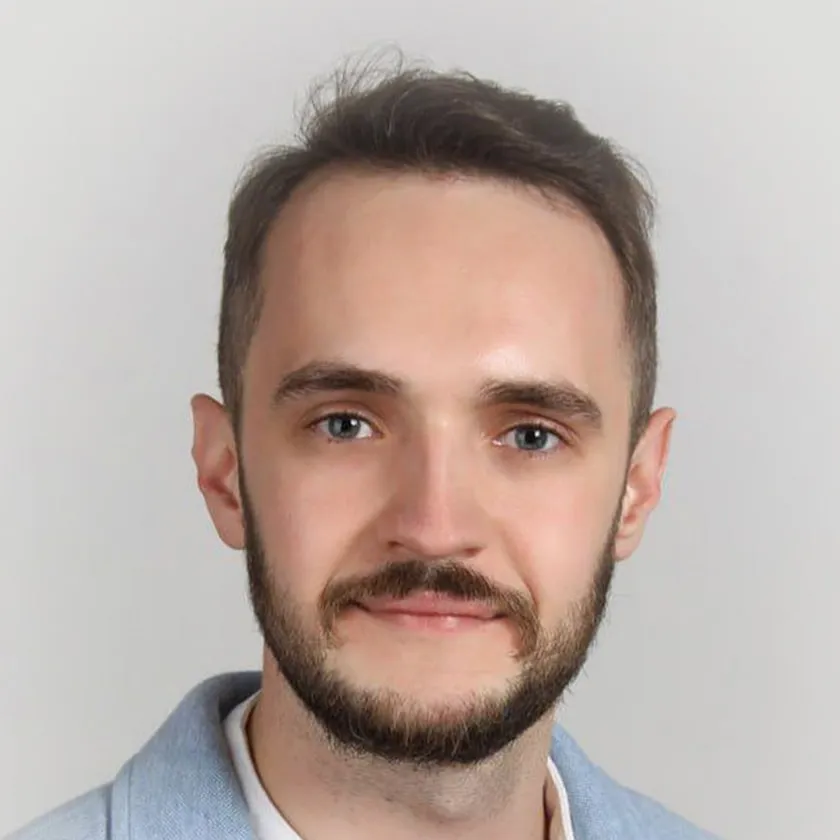
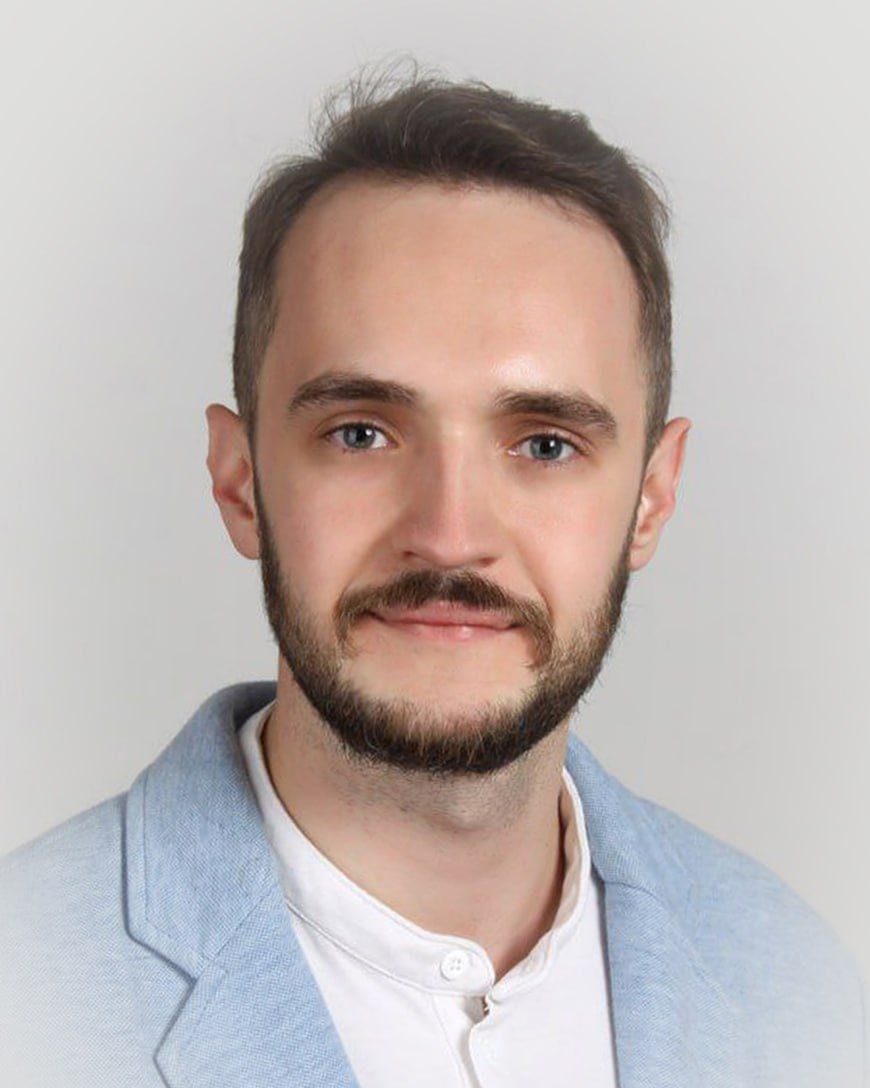
Photograph

Pavlo Radiuk

A portrait for proposals, partner descriptions and event materials. Download the photograph (JPEG, 870 × 1088 px)

Biographies

Short biography

58 words

Pavlo Radiuk is Associate Professor of Computer Science at Khmelnytskyi National University, Ukraine. His research makes deep-learning decisions legible to the experts who act on them, through transition matrices between model and human feature spaces. He has authored more than 70 scientific works and is technical lead of the Khmelnytskyi traffic pilot in the Horizon Europe project U_CAN.

Medium biography

157 words

Pavlo Radiuk is Associate Professor in the Department of Computer Science, Faculty of Information Technologies, Khmelnytskyi National University, Ukraine, where he is also a full-time doctoral candidate for the Doctor of Science degree. He received his Ph.D. in Computer Science in 2022 for work on information technology for the early diagnosis of pneumonia from individual radiographs.

His research concerns explainable and trustworthy artificial intelligence. He formalises the mapping between a deep model's learned feature space and the feature space a domain expert reasons with as a transition matrix, extends it with Lie-group equivariance and rough-set production rules, and validates it against expert judgement in cardiac MRI, ECG, thoracic imaging, UAV-based infrastructure inspection and urban traffic control.

He has authored more than 70 scientific works, served on the editorial board of the Journal of Intelligent & Fuzzy Systems (2023–2024), and is a Researcher in the Horizon Europe project U_CAN at Khmelnytskyi National University, within the EU Cities Mission.

Long biography

306 words

Pavlo Radiuk is Associate Professor in the Department of Computer Science, Faculty of Information Technologies, Khmelnytskyi National University, Ukraine. He graduated with distinction in Mathematical and Computer Modelling in 2017, defended his Ph.D. in Computer Science in December 2021 (awarded 2022), and since September 2025 has been a full-time doctoral candidate for the Doctor of Science degree, with Professor Oleksander Barmak as scientific consultant.

His research addresses a single question across several domains: how to make the decisions of deep-learning systems legible to the people who must act on them. The central construct is the transition matrix, an explicit linear mapping between a model's learned feature space and the feature space a domain expert already reasons with, so that an explanation becomes a change of basis rather than a heatmap. He has extended this with Lie-group equivariance, rough-set production rules and conflict-aware auditing, and validated it against clinical expert judgement, with Cohen’s kappa of 0.89 for ECG and 0.80 for cardiac MRI. The same framework carries into UAV-based inspection of wind turbines and photovoltaic plants, precision agriculture and reinforcement-learning traffic control.

He has authored more than 70 scientific works, including articles in Machine Learning and Knowledge Extraction, Sensors, Energies, Drones and Technologies. He holds nine registered Ukrainian copyright certificates and has co-authored two university textbooks.

He is a Researcher in the Horizon Europe project Ukraine towards Carbon Neutrality (U_CAN, grant agreement 101148374) at Khmelnytskyi National University, under the EU Mission for Climate-Neutral and Smart Cities, and technical lead of the Khmelnytskyi traffic pilot. He served on the editorial board of the Journal of Intelligent & Fuzzy Systems in 2023–2024, has completed more than 450 peer-review rounds for journals and conferences, and serves on the organising committee of the ExplAI workshop series. He held the Scholarship of the Cabinet of Ministers of Ukraine for Young Scientists (2022–2024).
Contact

Department profile Google Scholar ORCID Scopus Web of Science LinkedIn ResearchGate GitHub